What Makes Memphis Soil Different from Anywhere Else
If you live in Memphis, you are sitting on one of the most unusual soil formations in the United States. The region is covered by a thick blanket of windblown sediment known as loess, a fine-grained silt that was deposited over thousands of years by prevailing winds along the Mississippi River bluffs. This Memphis loess soil is uniform, porous, and highly sensitive to moisture. Unlike the rocky or sandy soils found in many other parts of the country, loess behaves almost like a sponge. When it rains, it absorbs water quickly, and when it dries out, it releases that water just as fast. That constant cycle of wetting and drying creates serious challenges for any home built on or near this ground.
Below the loess layer, the story gets even more complicated. Much of the Memphis area sits on expansive clay soils, often called silty clay or shrink-swell clay. These clays contain minerals that expand significantly when they absorb water and shrink just as dramatically when they dry. During a wet spring, the clay beneath your foundation can swell enough to push upward on parts of your slab or footing. During a hot, dry summer, the same clay contracts and leaves gaps around your foundation walls. This constant movement, known as soil movement, is one of the leading causes of foundation cracks in the region. Homeowners in Bartlett and Germantown see the same pattern because the same geologic layers extend across the metro area.
How Loess and Shrink-Swell Clay Send Water to Your Foundation
The combination of porous loess on top and expansive clay below creates a perfect storm for a Memphis wet foundation. Rainwater soaks through the loess quickly and reaches the clay layer, where it slows down and begins to accumulate. That water has to go somewhere, and all too often it moves laterally toward the path of least resistance: the backfill soil around your basement walls. Builders dig a hole to pour your foundation, then backfill it with loose soil that is far more permeable than the undisturbed ground around it. Water follows that loose backfill like a channel and ends up pressed against your foundation walls and footing. Over time, hydrostatic pressure builds up and forces moisture through hairline cracks, porous concrete, and the joint where the wall meets the floor.
At the same time, the shrink-swell clay foundation cracks that form during dry spells give water an even easier path into your basement. A crack that looks harmless in August can become a steady leak in February. This is why so many homeowners in Collierville and across the region notice water intrusion that seems to appear out of nowhere after a heavy rain. The soil is not just wet; it is actively moving and channeling water toward your home. Understanding this cycle is the first step toward fixing it, and it is why generic waterproofing advice from other parts of the country often falls short here.
Signs Your Memphis Home Is Losing the Battle Against Soil Movement
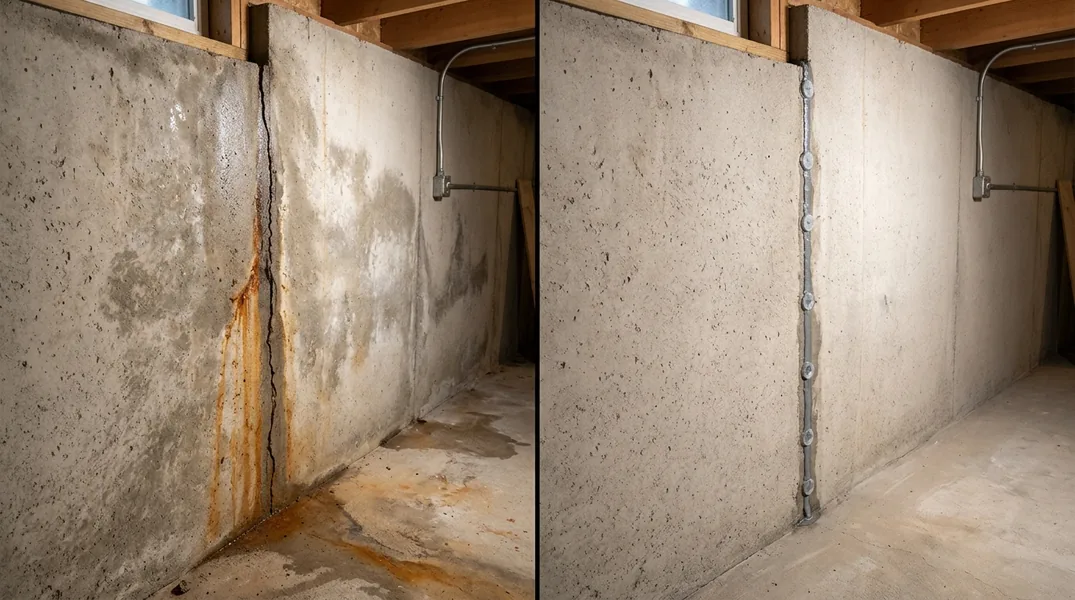
Soil movement rarely announces itself with a single dramatic event. Instead, it shows up as a series of small clues that homeowners learn to recognize. You might see stair-step cracks in brick or block walls, doors that suddenly stick in their frames, or gaps between the wall and ceiling trim. In the basement, you may notice efflorescence, that white powdery residue that forms when water evaporates through concrete and leaves minerals behind. Musty odors, damp spots on the floor, and peeling paint near the base of the walls are all common signs of a Memphis wet foundation. Outside, look for soil that has pulled away from the foundation, uneven concrete walkways, or downspouts that dump water right next to the house.
Because the soil here is so reactive, these symptoms can appear and disappear with the seasons. A crack that seems to close up in a wet spring may open wide again during a dry summer. That does not mean the problem is fixing itself. It means the soil is still moving and your foundation is still under stress. Catching these signs early gives you more options and usually lowers the overall repair bill. If you are seeing any of these clues, it is worth having a professional take a look before the next heavy rain season arrives.
Basement Waterproofing Near Me: Solutions Built for Memphis Soil
Not every waterproofing method works well in loess and expansive clay. Surface sealants, for example, may stop a small leak for a season, but they cannot address the hydrostatic pressure that builds up in the backfill. What works here is a system designed to manage water before it reaches your foundation and to relieve pressure when it does. Basement Waterproofing in this region typically starts with a thorough evaluation of the soil, drainage patterns, and foundation type. From there, a combination of interior and exterior strategies is usually the most reliable approach. An Interior Drain Tile System captures water that makes it through the walls or floor and routes it to a sump pump, keeping the basement dry even during prolonged rain. On the outside, Exterior Basement Waterproofing addresses the source by improving drainage around the foundation and sealing the walls against the wet backfill.
For homes showing signs of soil movement, Foundation Waterproofing may also include addressing cracks and stabilizing the areas where water is most likely to enter. The right plan depends on your specific lot, the age of your home, and how the soil behaves around your foundation. A local contractor who understands Memphis loess soil and silty clay can recommend a solution that fits your situation rather than applying a one-size-fits-all fix. If you want to know what a tailored plan would look like for your home, call Memphis Waterproofing at (901) 519-3853 or request a free estimate.
Preventing Future Foundation Damage from Memphis Loess Soil
Once your waterproofing system is in place, a little preventive maintenance goes a long way in this climate. Keep gutters and downspouts clear and make sure downspouts discharge at least several feet away from the foundation. The goal is to keep roof water from soaking into the loess right next to your walls. Grading matters too. The soil around your home should slope gently away from the foundation so surface water runs off instead of pooling. In older neighborhoods, settling and landscaping can reverse that slope over time, so it is worth checking after a few seasons. If you have irrigation, run it in short cycles and avoid saturating the soil right against the house.
During dry spells, some homeowners use a soaker hose around the foundation to keep the clay from shrinking too dramatically, but this should be done carefully and with professional guidance. The key is consistency: you want to avoid extreme swings between bone-dry and saturated soil. A waterproofing professional can help you set up a maintenance routine that matches your home and your lot. Regular inspections, especially after major weather events, can catch small issues before they become expensive repairs. Protecting a home in Memphis from soil movement and water intrusion is a long-term commitment, but with the right system and a bit of attention, it is entirely manageable.
Basement Waterproofing Cost in Memphis: What to Budget
Homeowners often ask what waterproofing will cost before they book an inspection, and the honest answer is that it depends on several factors. The size of your basement, the severity of the water intrusion, whether you need interior drainage, exterior work, or both, and the accessibility of your foundation all affect the final number. A small crack repair is far less expensive than a full interior drain tile installation, and exterior excavation adds cost because of the labor involved. Because Memphis loess soil and shrink-swell clay create such specific conditions, the right solution for your home may differ from your neighbor's even if your houses look similar from the street.
The best way to get an accurate figure is to have a professional evaluate your property and explain the options in plain language. Memphis Waterproofing provides clear, upfront pricing so you know what to expect before any work begins. Rather than guessing at a budget, schedule a free estimate and get a plan built for your home and your soil. You can also call (901) 519-3853 to ask questions and set up a visit. Investing in the right waterproofing now is almost always cheaper than repairing foundation damage later, especially in a region where the ground is constantly on the move.
Looking for a professional basement waterproofing contractor in Memphis? Memphis Waterproofing responds fast for all your basement waterproofing needs.
Get a Free QuoteOur services: Basement Waterproofing · Interior Drain Tile System · Exterior Basement Waterproofing